Mercedes Was 'Too Early' On Hands-Free Driving. Now It's Taking A Step Back
Mercedes is backing away from Level 3 autonomy after realizing the technology isn't as useful as it once hoped.
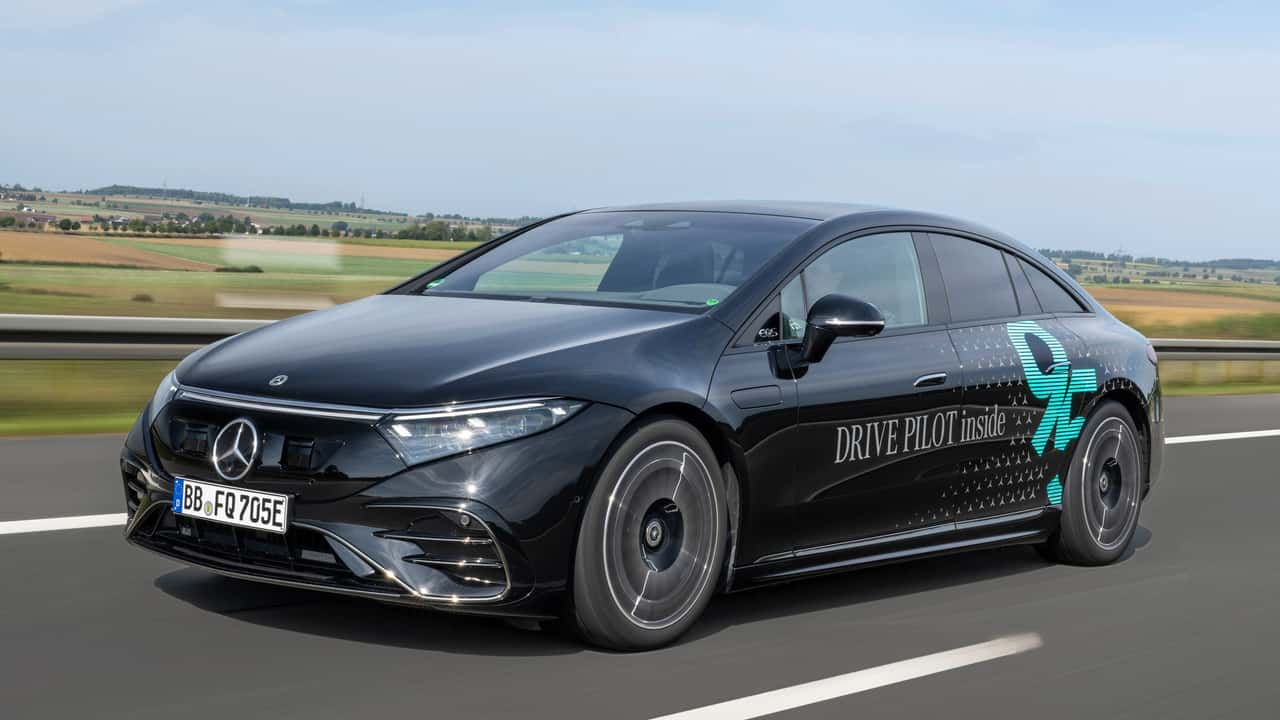

Mercedes-Benz was one of the first automakers to bring Level 3 driver-assistance technology to American roads. The newest S-Class, oddly, arrived in the US without it, signaling a change in direction as the automaker shifts toward more advanced driver assistance systems.
Mercedes-Benz Chief Technology Officer Jörg Burzer recently spoke with Road & Track at a media roundtable, where he explained that the company's early push into Level 3 autonomy taught the company an important lesson: Being first doesn't necessarily mean giving customers what they actually want.
As Burzer explains, Mercedes moved into Level 3 autonomy before the technology was particularly useful to everyday drivers. Now, it's prioritizing a more capable Level 2 system, with plans to eventually skip Level 3 altogether and pursue Level 4 autonomy.
Mercedes' First Level 3 System Had A Major Limitation
Mercedes made headlines with Drive Pilot in 2023, becoming the first automaker with Level 3 autonomy approved for the US. It was initially offered on the S-Class and EQS, allowing drivers to take their eyes off the road under certain conditions.
The issue was that Drive Pilot was limited to speeds of around 40 mph, making it useful only in slow-moving traffic rather than typical highway driving. It was also restricted to certain roads and operating conditions, which likely played a role in Mercedes' change of direction. As Burzer put it:
'Sometimes if you are too early, then you see that you have to work on what the customer really wants.'

Mercedes-Benz Drive Pilot Prototype
Mercedes Could Jump Straight To Level 4
Mercedes isn't ready to give up on hands-free driving, though. The automaker says it’s working to make its Level 2 systems considerably more capable.
The company's MB.DRIVE Assist Pro technology is designed to provide point-to-point assistance, taking on more of the driving in both highway and urban environments. It can help with everything from changing lanes and navigating intersections to making turns and responding to traffic lights.
The updated S-Class reportedly uses as many as 27 sensors to support these capabilities. Drivers still have to pay attention and remain ready to take control, but Mercedes believes this approach offers something more useful in everyday driving than its previous Level 3 system.
Rather than spend years developing another incremental Level 3 system, though, Burzer says Mercedes intends to focus on Level 4 autonomy. At that level, a vehicle can handle all driving tasks within its designated operating conditions without requiring a human to supervise it.
That doesn't mean fully autonomous Mercedes models are right around the corner. Burzer estimates that Level 4 technology won't reach a production Mercedes-Benz until sometime after 2030. Even then, its rollout will likely be gradual.
More From Mercedes
Source: Road & Track
RECOMMENDED FOR YOU
Mercedes Could Delay US GLC Production Until 2030, Report Says
POV Video Shows What It's Like To 'Fly' In Tesla's New 'Roadster'
Mercedes Praises China For Developing Cars So Quickly, Turns To AI To Catch Up
Forget The Z06. This Is The Used C7 Corvette You Should Buy
Mercedes Found Another Place To Put A Screen: The Windows
The Mazdaspeed3 Isn't Coming Back. Mazda Says 'It's Rumors'
Mercedes Has 7 New Models Coming In 2027. Here's All Of Them