Honda And Toyota Found A Clever Way To Make Hybrid Engines More Efficient
Why do hybrid engines sacrifice power for efficiency? The Atkinson cycle makes every drop of fuel go further.
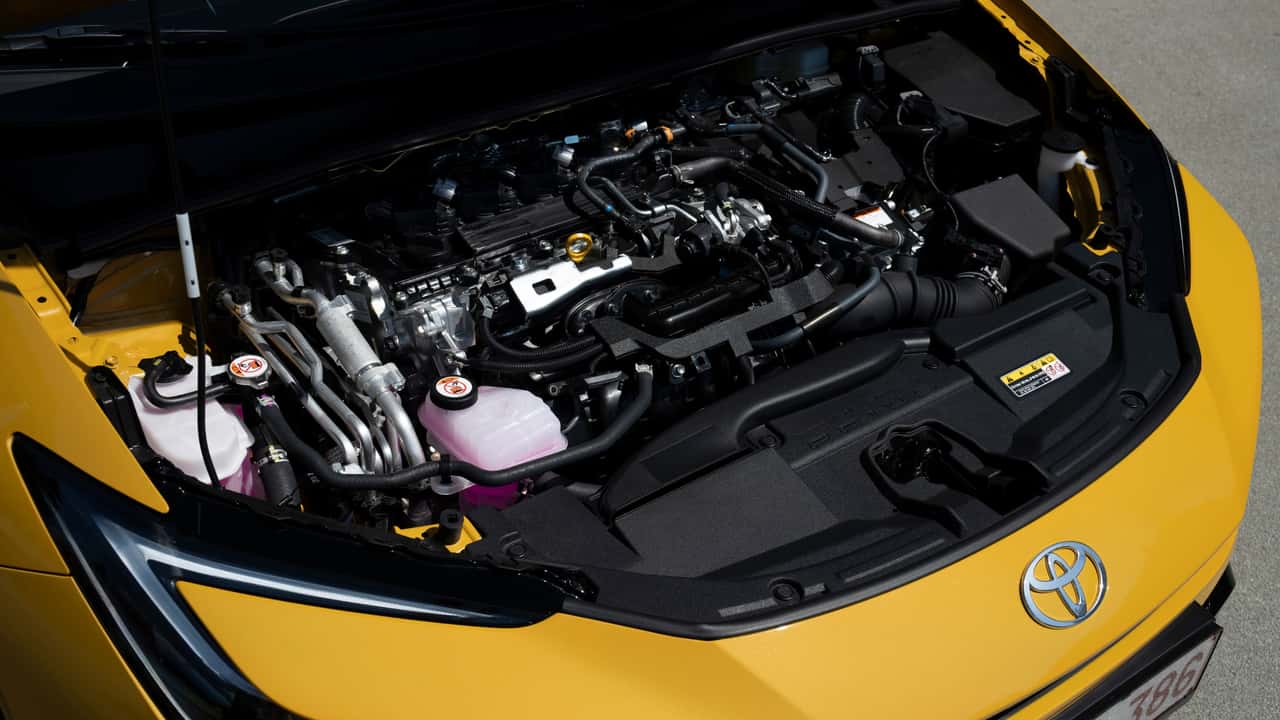

Most gasoline engines are designed to make as much power as possible from every drop of fuel. Hybrid engines take a different approach. Many deliberately sacrifice horsepower to squeeze more efficiency out of gasoline, using an unusual design called the Atkinson cycle.
It's a big reason cars like the Toyota Prius and Honda Accord Hybrid can achieve impressive fuel economy without relying entirely on electric power. The clever part is how automakers make up for the engine's biggest weakness: an electric motor does the heavy lifting when extra power is needed.
Here's how the Atkinson cycle works, why it makes engines more efficient, and why it's become such a popular choice for hybrid vehicles.
What Is An Atkinson-Cycle Engine?
The Atkinson cycle is a variation of the conventional four-stroke combustion process, named after British engineer James Atkinson, who patented his engine design in 1882. Unlike a traditional Otto-cycle gasoline engine, which uses matching compression and expansion ratios, the original Atkinson design used a mechanical arrangement to create different effective stroke lengths.
Modern engines achieve a similar result using variable valve timing. The intake valve stays open slightly longer than it would in a conventional engine, allowing some of the air inside the cylinder to flow back into the intake manifold as the piston begins moving upward.
This effectively reduces the amount of air compressed inside the cylinder while allowing the expanding combustion gases to continue pushing the piston through a relatively long power stroke. The engine extracts more useful energy from combustion and wastes less of it as heat, improving thermal efficiency.
In simple terms, an Atkinson-cycle engine is designed to make better use of the fuel it burns rather than maximize the power produced by every combustion cycle.
Why Making Less Power Can Actually Save More Gas

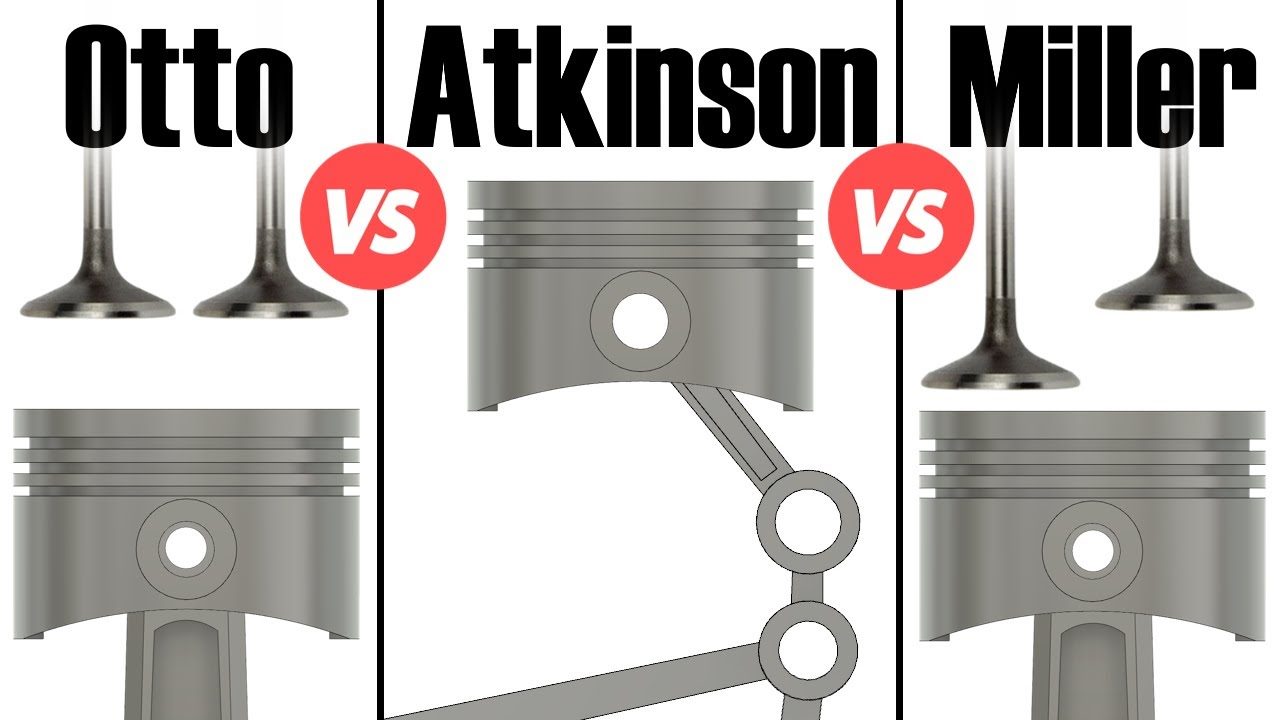
The biggest advantage of the Atkinson cycle is its higher expansion ratio relative to its effective compression ratio. That allows the engine to extract more energy from expanding gases before they leave through the exhaust system.
A conventional gasoline engine has to balance efficiency, power, emissions, and drivability. The Atkinson cycle shifts that balance toward efficiency, making it particularly effective when an engine spends much of its time operating under relatively light loads.
It can also reduce pumping losses. Because the intake valve remains open during part of the compression stroke, the piston does not compress as much of the intake charge as it would in a conventional Otto-cycle engine.
There is a trade-off, though. The reduced effective compression means the engine generally produces less power and torque for a given displacement, particularly at lower engine speeds. That's one reason Atkinson-cycle engines are so commonly associated with hybrids rather than performance cars.
The Miller cycle is very similar, as it also improves efficiency by keeping the intake valve open longer to reduce effective compression. The main difference is that Miller-cycle engines typically use a turbocharger or supercharger to compensate for the reduced intake charge. Some modern hybrids use modified Atkinson/Miller-cycle strategies, combining variable valve timing and, in certain designs, forced induction to balance fuel economy with performance.
Why Hybrid Cars Are The Perfect Match
This is where the technology really makes sense. A hybrid doesn't depend on its gasoline engine to provide all the power needed to move the vehicle. An electric motor can deliver strong torque from a standstill, helping compensate for the Atkinson engine's weaker low-speed performance.
The gasoline engine can therefore spend more time operating in its efficient range, while the electric motor helps with acceleration and other situations requiring additional power. Depending on the hybrid system, the engine can also shut off when it's not needed, reducing fuel consumption further.
Toyota has used this approach in the Prius since its introduction in 1997, while Honda's two-motor hybrid system also combines an Atkinson-cycle gasoline engine with electric motors. The exact way power is delivered differs between manufacturers. Toyota offers a closer look at why it uses Atkinson-cycle engines in its hybrid vehicles, explaining how the design helps improve fuel efficiency.
Honda also explains how its Atkinson-cycle engine works in hybrid vehicles, including the role of delayed intake-valve closing in reducing effective compression. Mind you, the underlying idea is similar: let the combustion engine focus on efficiency and use electric assistance to improve overall performance.

Toyota Prius
The Trade-Off: Better Fuel Economy, Less Power
Atkinson-cycle engines offer several benefits, but they aren't automatically better than conventional gasoline engines in every application. Their strengths and weaknesses depend heavily on how the vehicle is designed and driven. The main advantages include:
- Better thermal efficiency: More of the energy released during combustion is converted into useful mechanical work.
- Improved fuel economy: The engine can use less gasoline to produce the power required during efficient operating conditions.
- Good hybrid compatibility: Electric motors compensate for the reduced low-speed torque.
- Lower fuel consumption in city driving: Hybrid systems can switch off the gasoline engine during certain low-speed and stopping conditions.
- Reduced wasted energy: The engine's operating strategy helps limit losses that would otherwise reduce efficiency.
The biggest disadvantage is reduced specific power compared with a similarly sized conventional engine. An Atkinson-cycle engine may feel less responsive on its own, especially when accelerating from low speeds. It can also be less suitable for vehicles that regularly need to tow heavy loads or deliver strong performance without electric assistance.
Does Every Hybrid Have An Atkinson-Cycle Engine?
No, although the design is widely used in gasoline-electric hybrids. Toyota and Honda are among the manufacturers that have built their hybrid systems around Atkinson-cycle engines, but hybrid powertrains vary considerably.
Some engines can also switch between Otto-like and Atkinson-like operation depending on driving conditions. Variable valve timing gives engineers flexibility to prioritize efficiency under lighter loads while allowing more conventional engine behavior when greater power is needed.
It's also worth remembering that the Atkinson cycle is not exclusive to hybrids. Automakers can use similar valve-timing strategies in conventional gasoline vehicles, although the electric motor makes the efficiency-versus-power compromise easier to manage.
The Atkinson cycle helps solve one of the biggest challenges facing gasoline engines: extracting as much useful energy as possible from fuel. On its own, it involves a compromise. But pair it with an electric motor, and it becomes one of the most effective ways to make a hybrid both economical and practical.
More From Motor101
RECOMMENDED FOR YOU
The Prelude Type R Is Real, But Not From Honda
Someone Stuffed A 13-Rotor Engine Into A Miata. And Yes, It Actually Runs
Honda Just Had Its Best October Sales Month In Six Years
October Winners And Losers: Mazda Surges As Mustang Sales Slide
Honda's Hotter Civic Type R Is 'In Development' For The US
Mid-Size Trucks Are Booming. Now Everyone Wants In
Woman Buys Honda. Then She Gets A ‘High Voltage System’ Warning: ‘‘I Have Spent Over $2,000’