Mercedes Found Another Place To Put A Screen: The Windows
From windows with integrated LEDs to windshields projecting holographic images, the screen craze isn't over.
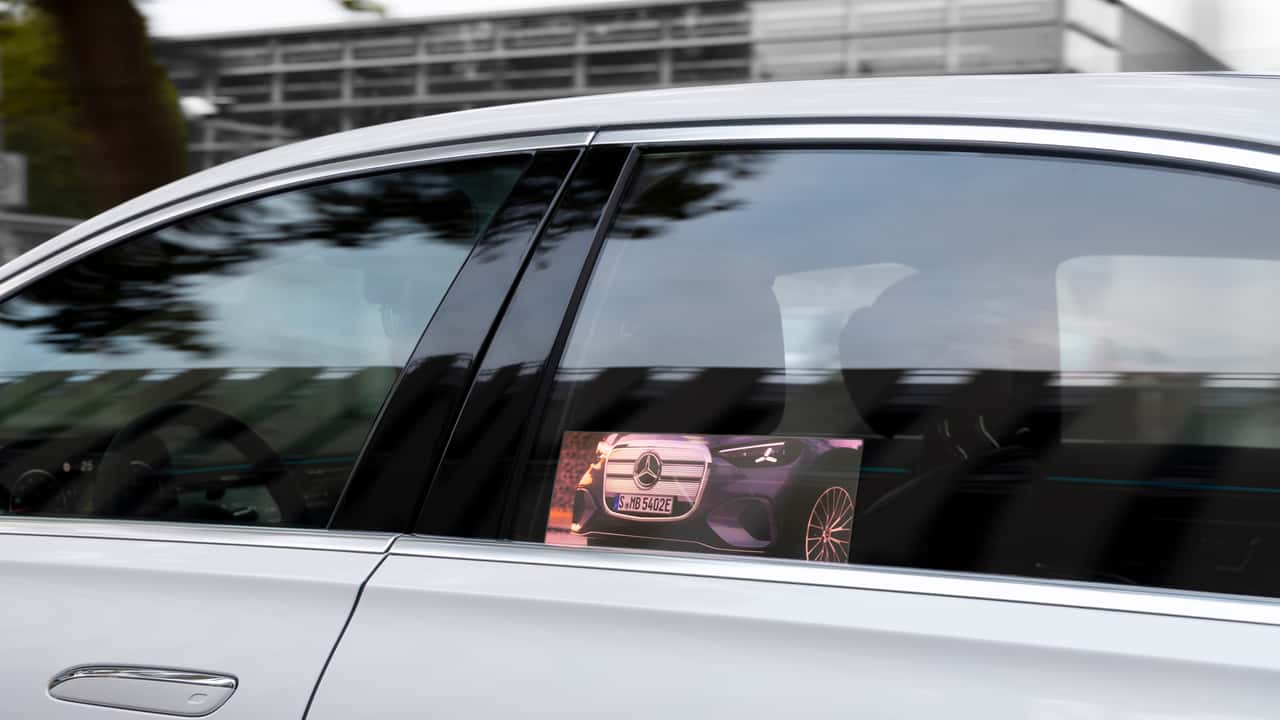

Mercedes has never been shy about its love of big screens. Former design chief Gorden Wagener even took a swipe at BMW and Audi for not going big enough with their displays, arguing that modern cars need large screens. Apparently, Mercedes isn't done finding new places to put them.
The three-pointed star is now exploring ways to integrate LED displays directly into car windows and turn the windshield into a holographic communication surface. At this rate, the only place left without a screen might be the tires. Of course, Mercedes will argue that all this technology serves a purpose beyond giving passengers something else to stare at.
The company says these innovations can improve communication with the outside world and enhance safety by making vehicles more visible and allowing them to display useful information. Still, it's getting harder to tell where the pursuit of better technology ends, and the industry's obsession with turning every available surface into a screen begins.
It's All In The Name Of Safety
As part of its latest technology showcase, Mercedes has revealed several innovations currently in development, including LED displays integrated directly into vehicle glass. The idea is to let cars communicate with their surroundings by displaying warning signs, safety symbols, and traffic-related information through the rear window.
The technology uses LED elements laminated into the glass, keeping them almost invisible when they're not in use. Mercedes is exploring two different solutions: Mini-LEDs for larger display areas and Micro-LEDs for smaller, higher-resolution applications.
The former could display brake lights, warning symbols, and traffic information to drivers behind the vehicle. The latter could handle more sophisticated graphics, including animations. In other words, your next Mercedes might be able to communicate with the car behind you without relying solely on traditional lights or external displays.

Holographic display in the windshield
Taking Head-Up Displays To Another Level
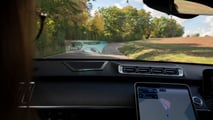
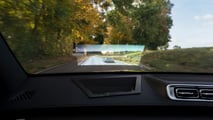
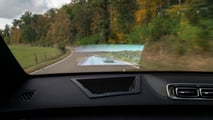
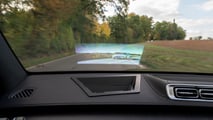
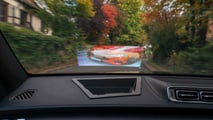
Mercedes isn't stopping there. The company is also working on a holographic display that turns the windshield into an on-demand information and entertainment surface. Rather than installing another screen or a conventional HUD, engineers are using a projector mounted in the instrument panel to beam images onto a special transparent film laminated into the windshield.
The film incorporates holographic optical elements that selectively reflect the projected light, keeping the images visible even in bright sunlight. Another clever trick: the projected content is visible only from specific viewing angles, so the driver won't see what's displayed on the passenger side, and vice versa. Potential applications include navigation, driving information, video calls, and even movies. Hopefully, ads aren't part of the plan, though I guess that's inevitable.
Crucially, the display appears only when needed, rather than permanently turning the windshield into another giant screen. That's probably a good thing, considering how much attention drivers should be paying to the road.
Are we really running out of places to put screens in cars? Mercedes seems determined to prove otherwise. At this rate, the next logical step is probably turning the panoramic roof into a giant tablet.
Mercedes next-gen screen tech for windshield and side glass
What About The Repair Costs?
All jokes aside, there's also the small matter of repair costs. Replacing a conventional side window is already expensive enough, but integrating LEDs directly into the glass adds another layer of complexity. A minor accident, a cracked window, or even damage to the electronic components could turn what used to be a relatively straightforward replacement into a much costlier repair.
Owners might eventually find themselves paying a premium not just for the glass, but also for the technology embedded inside it. Because apparently, even breaking a window is becoming a luxury-car expense.
Audi Q7 with turn signal projection
Audi Q6 E-Tron with triangle warning symbol in the taillights
Audi Is Doing Things Differently
Mercedes' rival Audi is taking a different approach with the new Q7 and Q9, which can project animated turn-signal arrows directly onto the road. Projectors integrated into the headlights and taillights display illuminated arrows in sync with the conventional indicators, making the driver's intentions easier to understand.
The idea is to improve safety by alerting nearby motorists, cyclists, and pedestrians, particularly at night or when conventional turn signals aren't easily visible. Similarly, some Audi models already use OLED taillights to display warning symbols, alerting drivers behind the vehicle to potential hazards and showing that rear lighting can do more than simply signal braking or turning.
As much as we like to poke fun at the industry's obsession with screens and flashy technology, it's fascinating to see how automakers keep finding new ways to improve safety. Whether it's projecting turn signals onto the road or using illuminated glass to communicate with the outside world, these innovations show there's still plenty of room for creativity.
Not every idea will catch on, but it's encouraging to see manufacturers exploring solutions that could make roads safer for everyone.
More About Screens:
RECOMMENDED FOR YOU
Mercedes Has 7 New Models Coming In 2027. Here's All Of Them
Honda Just Had Its Best October Sales Month In Six Years
Watch Mercedes-AMG's Ultimate CLE Lap The Nürburgring: Video
Cadillac's F1 Team May Already Be For Sale For $3 Billion
Leather Seats Cracking? You're Probably Cleaning Them Wrong
BMW Is Reportedly Cutting 1,800 Jobs In China
The Vatican Is Showing Off A Century Of Mercedes Popemobiles