The Vatican Is Showing Off A Century Of Mercedes Popemobiles
Mercedes has supplied vehicles to the Vatican for decades, with its glass-enclosed G-Class Popemobiles the most famous.
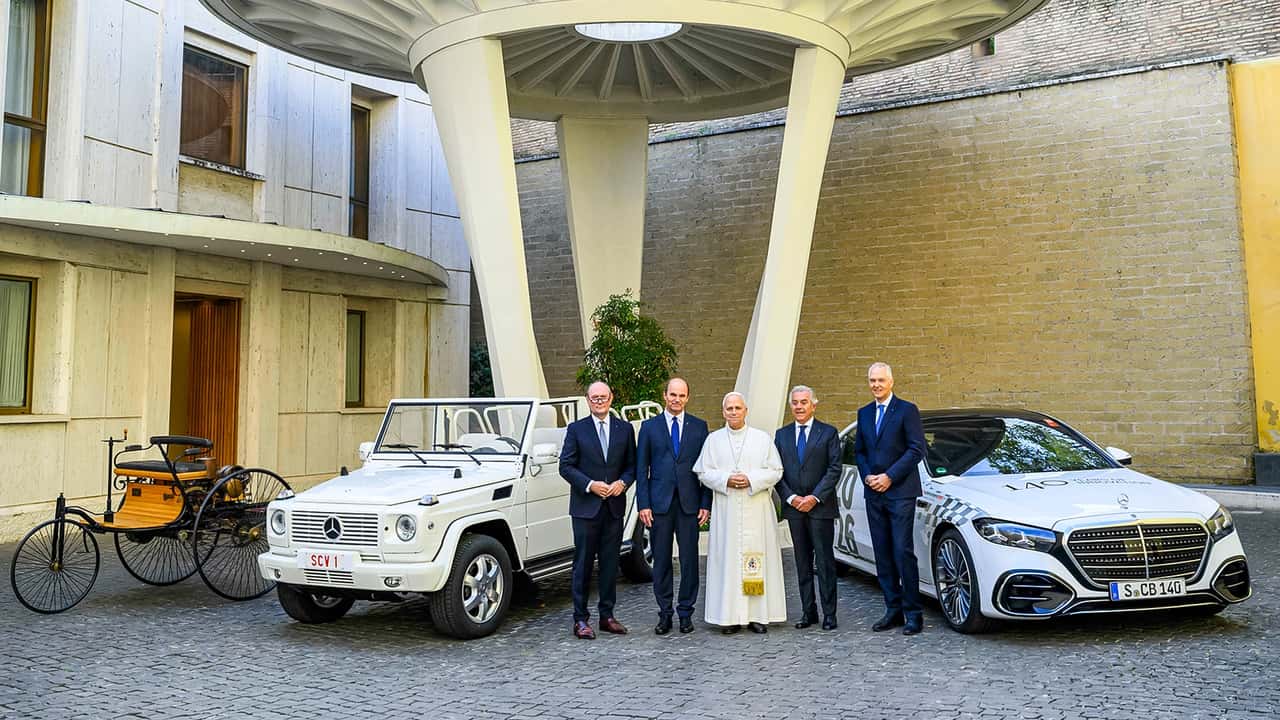

Almost everyone is familiar with the so-called Popemobiles, the vehicles used by the Pope during public appearances. Mercedes-Benz and the Vatican have enjoyed a close working relationship since 1930, with the German automaker supplying both official and utility vehicles to the Holy See.
This remarkable automotive history is now the focus of an exhibition titled "Mercedes-Benz: A Century of Popemobiles." Running until January 31, 2027, the exhibition is housed in a glass pavilion near the Vatican's Pinacoteca (Picture Gallery). Eight historic Mercedes-Benz vehicles illustrate the evolution from traditional papal limousines to purpose-built Popemobiles.
Mercedes Nürburg 460 (W 08), 1930

The special relationship between Mercedes-Benz and the Vatican began in 1930 with the Nürburg 460. The Pullman limousine, powered by a 4.6-liter inline-eight engine, received extensive interior modifications for Pope Pius XI.
Highlights included an individual seat for the pontiff upholstered in fine silk brocade, carefully selected wood and metal finishes, and an elaborately decorated headliner.
Mercedes 300 d Landaulet (W 189), 1960
Thirty years later, Pope John XXIII received a Mercedes-Benz 300 d Landaulet. Its wheelbase was extended compared to the standard model, while the rear side windows could be completely removed during public appearances.
Opening the rear doors automatically deployed entry steps. The Pope's centrally positioned seat was electrically adjustable, and controls for features such as the climate control system and radio communication were conveniently accessible from the rear passenger compartment.
Mercedes 600 Pullman-Landaulet (W 100), 1965
The 600 Pullman Landaulet was handed over to Pope Paul VI in the fall of 1965. The prestigious limousine received numerous special modifications for its duties at the Vatican.
These included wider rear doors, a raised roof over the rear passenger compartment, and a specially designed, individually adjustable seat for the Pope. Other features included a cooling system and an intercom that allowed the pontiff to communicate with the driver.
Mercedes 300 SEL Pullman (W 109), 1967
Delivered to the Vatican in 1967, during the pontificate of Paul VI, the 300 SEL Pullman limousines were significantly longer than their standard counterparts. Their wheelbases were extended by 25.6 inches, and they also featured larger rear doors.
Unlike the Landaulet models, these six-seat limousines were primarily used to transport high-ranking Vatican guests rather than the Pope himself.
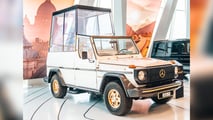
Mercedes 230 G (W 460), 1980, and 230 GE "Popemobile," 1982
The Mercedes-Benz 230 G developed for Pope John Paul II's visit to Germany in 1980 introduced an entirely new concept for the papal vehicle. A tall, transparent dome covered the rear passenger compartment, protecting the Pope from the elements while allowing the public to see him clearly.
Based on the long-wheelbase G-Class, the vehicle featured pearl-white paintwork, gold-colored trim, and a white interior. Its climate control system and rear-compartment lighting were specifically adapted to its unique operating requirements.
Following the assassination attempt on the Pope in 1981, Mercedes-Benz also built a second, virtually identical vehicle. This one was based on the 230 GE and featured armored protection.
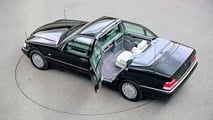
Mercedes S 500 Long Landaulet (Series 140), 1997
Pope John Paul II's time in office is closely associated with the G-Class-based Popemobile. However, Mercedes-Benz also built a more traditional Landaulet based on the S-Class for the Holy Father.
The S 500 Long from the 140 series was delivered to the Vatican in 1997. Its features included an electrohydraulic convertible roof and a particularly spacious individual seat in the rear passenger compartment.
Mercedes ML 430 "Popemobile" (W 163), 2002
In 2002, Mercedes-Benz transferred the G-Class Popemobile concept to its M-Class SUV with the ML 430. This time, the transparent dome was more seamlessly integrated into the vehicle's specially designed bodywork, with large windows surrounding the Pope's seat.
Pope John Paul II first used the vehicle during World Youth Day in Toronto in 2002. Like its G-Class predecessor, the M-Class Popemobile featured pearl-white paintwork and a white interior.
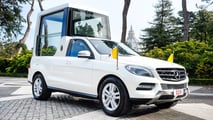
Mercedes ML 500 "Popemobile" (W 166), 2012
Exhibition in the Vatican: A Century of Popemobiles
In December 2012, Mercedes-Benz delivered an ML 500 to the Vatican. Used by Pope Benedict XVI, the vehicle further refined the established Popemobile concept.
The transparent enclosure over the rear passenger compartment was enlarged, making it easier for the Pope to get in and out. The larger glass surfaces also provided an even better view of the pontiff during public appearances. Inside, Mercedes-Benz introduced a revised lighting concept to improve the overall environment of the rear compartment.
More From Mercedes-Benz:
Gallery: Exhibit at the Vatican: A Century of Popemobiles
RECOMMENDED FOR YOU
Woman Lets Her Husband Pick Her New Car. She Wanted A Mercedes G-Wagon. He Comes Home With A Mazda
Lincoln Recalls 11,623 Nautilus And Corsair Hybrids After Unexpected Neutral Shifts
Mercedes Boss Talks Electric E-Class, Developed From A 'White Sheet Of Paper'
Ford Is Already Dropping The Dark Horse SC's $31,000 Track Pack
This New Mercedes Gas Engine Has An Electric Turbo, And It's Not For AMGs
Why Are Some Traffic Lights Horizontal Instead Of Vertical?
F1 Star Kimi Antonelli Reverses Mercedes-AMG GT Into A Wall Before US GP