Solid-state batteries improve with trilayer electrolyte
It has 3 different materials that all perform a specific task: resisting fires, preventing subsidence and promoting the passage of ions


Solid-state batteries will set new standards in the field of lithium-ion batteries. They will have higher density and also greater charging power. Efforts are currently focusing on developing mass production methods, but scientists are also thinking about how to get the maximum potential out of this type of battery.
Now a team of South Korean researchers has developed a lithium metal battery with a solid polymeric triple-state electrolyte that promises to be safer and also more long-lasting.
The secret of the triple-state electrolyte
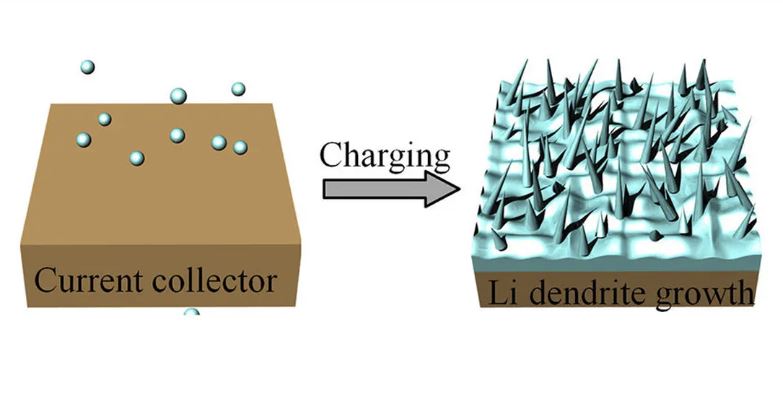
Lithium metal batteries with 'traditional' solid polymer electrolyte have a limitation. They do not allow optimal interaction between the electrodes. This limits performance because otherwise, there is a risk of dendrites, those famous growths that form during charge and discharge cycles.
The research team, working in the Energy and Environmental Technology Division of the Daegu Gyeongbuk Institute of Science and Technology, has developed a special 3-layer solid polymer electrolyte that counteracts the formation of dendrites and thus provides greater resistance to overheating and fire.
Each layer of this electrolyte fulfils a specific task. The first layer, which contains decabromodiphenylethane, prevents fires; the second, composed of zeolite, a mineral with a microporous and crystalline structure that increases the structural strength of the electrolyte itself; finally, the third contains a high concentration of lithium bis(trifluoromethane)sulphonimide salt, which facilitates the movement of lithium ions between anode and cathode and vice versa.
Superior durability and safety
Laboratory tests on lithium metal cells equipped with this trilayer electrolyte showed that the battery retained 87.9 per cent of its initial performance after 1,000 charge and discharge cycles. 'Conventional' solid-state batteries, subjected to similar cycles, reach a maximum of 70-80%. Moreover, thanks to their special design, even in the event of overheating, these revolutionary batteries are able to switch themselves off.
Kim Jae-hyun, professor leading the research said: "From the initial findings, we believe this research will contribute significantly to the commercialisation of lithium metal batteries using solid electrolytes. They will be suitable for various uses, from electronic devices to electric cars and storage systems'.
About solid-state batteries:
RECOMMENDED FOR YOU

BMW's Electric Cars Are Helping Keep Its V8s Alive
Modern Cars Are Packed With Sensors. What Do They All Do?
Hyundai Says The Biggest Challenge For Hydrogen Cars Is Finding Customers
Used EV Prices Were Plummeting. Now They're More Expensive Than Gas Cars
Toyota And Waymo Join Forces To Launch Driverless bZ4X Fleet In 2027
Nissan Built Three Awesome Off-Road Rigs For SEMA
Volkswagen Will Take China-Developed Technology Global In Major Strategy Shift